
What Is a Court Docket in Waseca County
A docket is the running list of events in a case. It can show filings, hearings, continuances, orders, judgments, plea hearings, trials, sentencing, and other events. The docket is not the same thing as the full file, because the full file can include the underlying documents and attachments.
In Waseca County, docket information comes from MCRO and the local public calendar. The public calendar is especially useful because it lists courtroom, time, judge, and hearing type for upcoming matters.
How to Find Waseca County Dockets Online
Use MCRO Hearing Search for scheduled hearings and the Waseca public calendar for the daily lineup. The calendar is posted early in the day and updated through the workday, so it is a practical check for hearings that are about to happen. If a hearing does not show up online, it does not always mean the hearing was canceled.
- Open MCRO Hearing Search or the Waseca public calendar.
- Search by name, case number, attorney, or judicial officer.
- Review the courtroom, date, time, and hearing type.
- Check case detail in MCRO if you need the surrounding docket.
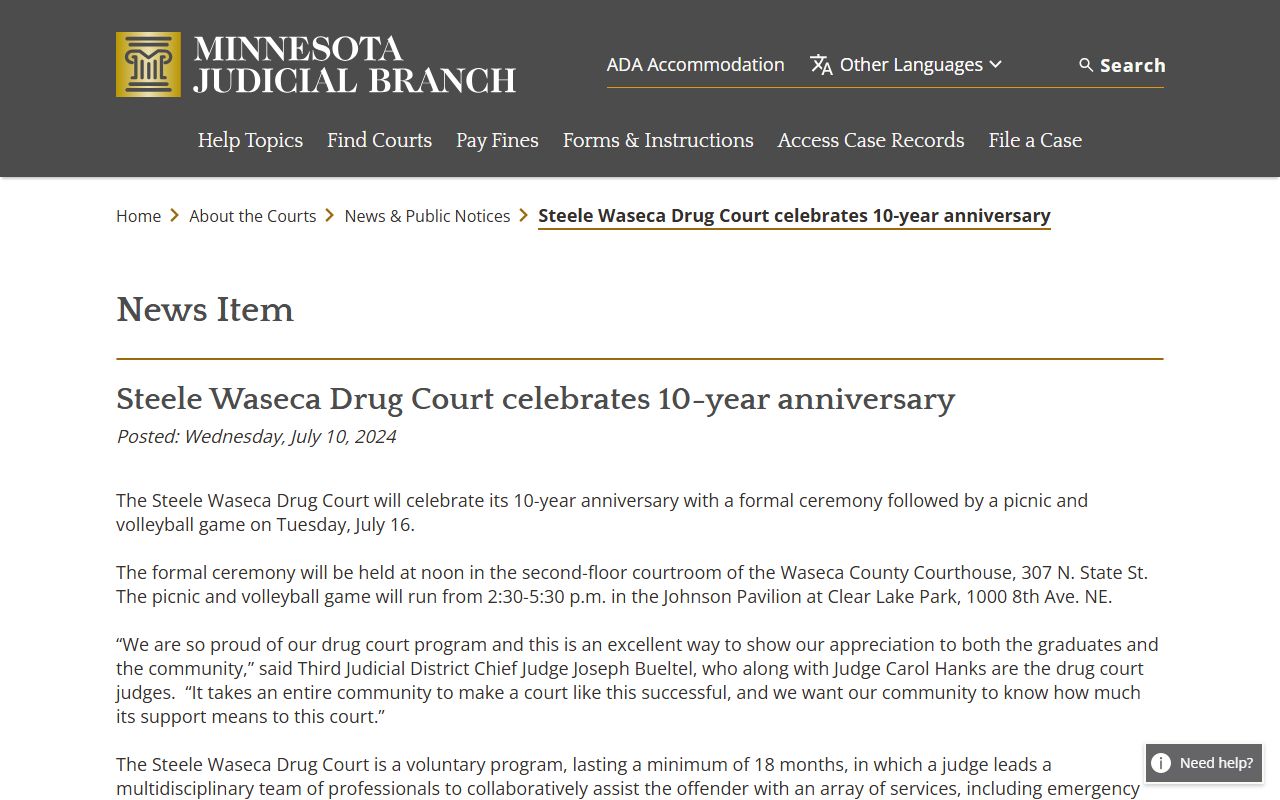
Source: Steele Waseca Drug Court anniversary notice.
Sample Waseca County Docket Entry
Typical docket lines in Waseca show an entry date, event type, the filing party or attorney, and the document or hearing associated with the event. In a hearing calendar view, you may also see courtroom, judge, hearing time, and the case type code.
| Field | What It Shows |
|---|---|
| Entry Date | The date the event was filed or scheduled. |
| Event Type | The filing or hearing category. |
| Party Filing | The person or office that filed the event. |
| Document Link | A public document when one is available remotely. |
Courts That Publish Dockets in Waseca County
Waseca’s docket path runs through district court. Criminal, family, probate, traffic, and civil matters all use the same district-court backbone, and the Third Judicial District is the umbrella structure above the local courthouse. The local calendar is the most direct way to see what is happening in the courtroom now.
- Waseca County District Court - local criminal, civil, family, probate, and traffic hearings.
- Minnesota Court of Appeals - appellate docket if a case is appealed.
- Minnesota Supreme Court - final appellate docket for selected matters.
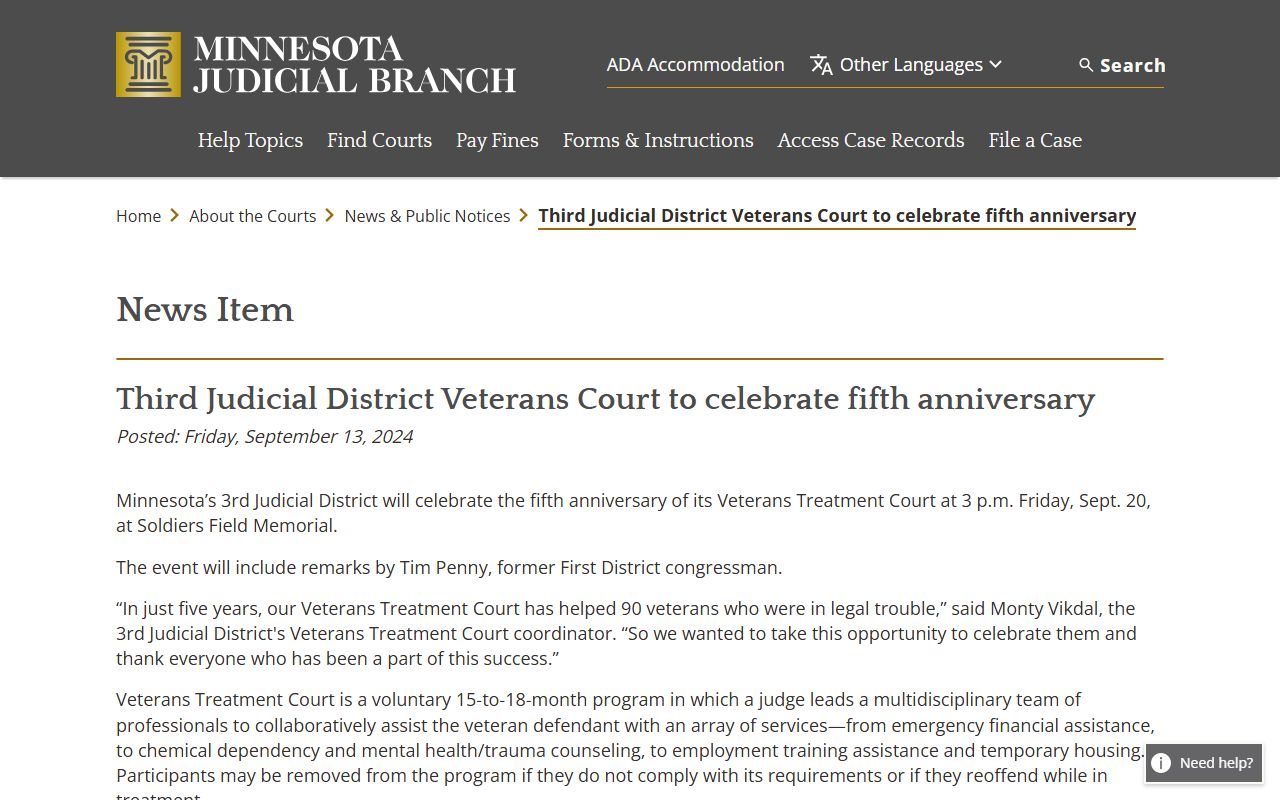
Source: Third Judicial District Veterans Treatment Court notice.
Docket vs. Full Case Record
The docket is the roadmap; the case record is the packet behind it. A docket tells you what happened and when. The full case file adds the pleadings, motions, orders, and other documents that explain why the event happened. For Waseca users, that distinction matters because docket searches are fast, but a full answer can still require document search or a courthouse request.
How to Read a Waseca County Docket
Common docket clues include continuance, settlement conference, arraignment, plea hearing, evidentiary hearing, sentencing, and judgment. On the public calendar, hearing type and courtroom are especially important because they tell you where to go and what the court is doing with the case. If the hearing type is remote or in person, Waseca’s hearing-appearance policy may control the format.
That policy matters because Waseca County uses different appearance defaults for criminal, family, probate, and treatment-court matters. A docket entry may show the hearing itself, but the policy tells you whether the hearing is expected to be in person or remote, which is the part users most often need when they are trying to plan a courthouse visit.
Calendar Limits and Change Notices
The public calendar is useful, but it is not a full case inventory. Some matters are omitted because they are confidential, non-remotely accessible, or simply not posted in the same way as ordinary public hearings. Waseca’s own court page also says the calendar is posted early in the day and updated throughout the business day, which means the hearing you see at noon may not look the same by late afternoon.
That is why docket research in Waseca works best as a two-step check: use the calendar for the live hearing picture, then use MCRO or court administration if you need the record behind the event. For a newer case flow issue, the local district court and the Third Judicial District administration are still the offices that can explain what the docket entry means.
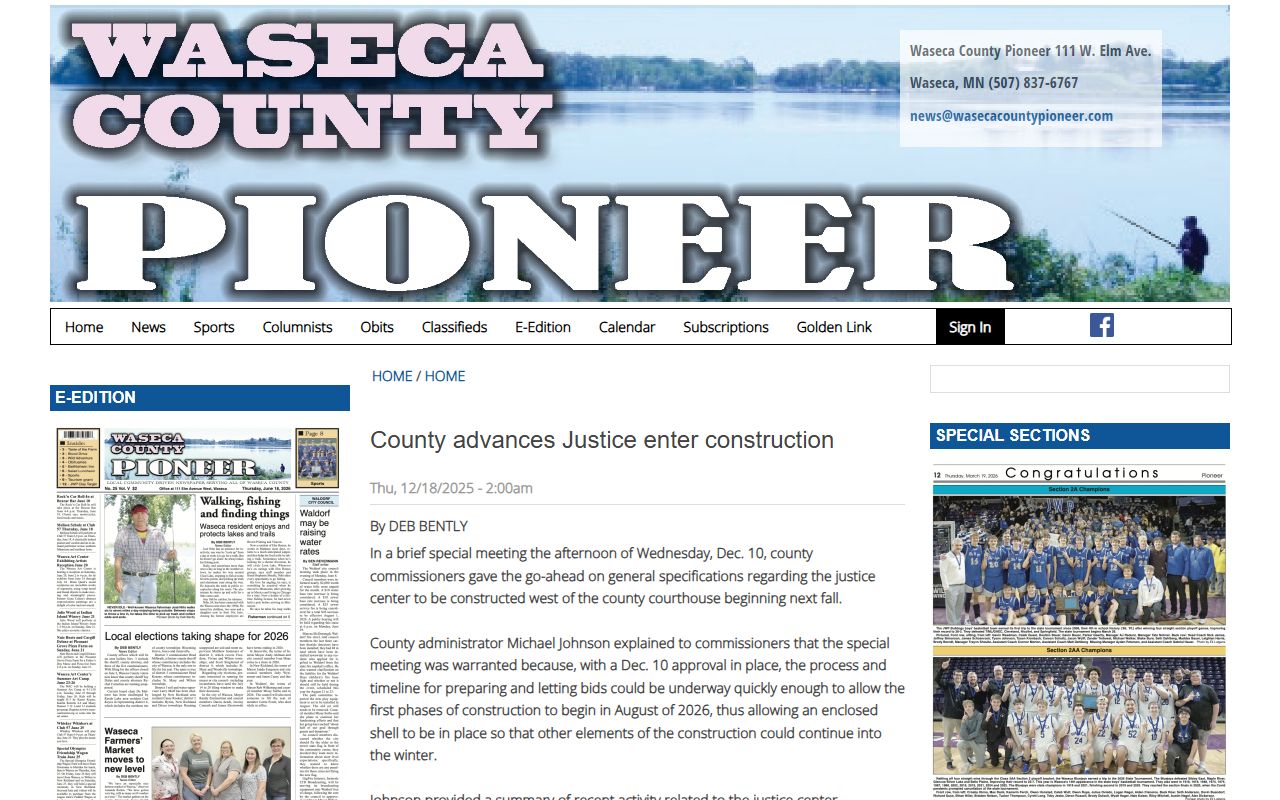
Source: Waseca justice center construction coverage.
Why Docket Research Still Needs the Court File
A docket gives you the shape of the case, but it rarely gives you the full reason behind each event. That is why a Waseca docket search is usually the first stop, not the last one. If you see a continuance, an order, or a plea hearing, the case file may still be needed to understand the motion, notice, or stipulation that sits behind the docket line.
This is especially true in Waseca because the local court calendar can change during the day. A docket line may show the hearing, but the calendar and the judge assignment tell you how the court is actually handling that hearing. For users who are trying to appear in person, that distinction matters more than the docket label itself.
Docket Notes For Waseca Users
Waseca docket work is strongest when it is tied to the local courthouse and not treated like a statewide abstract. A hearing scheduled in the Third Judicial District still belongs to the Waseca case if that is where it was filed, and the county calendar can be the fastest way to see whether a morning hearing was moved, continued, or reset.
That is why docket lookups are useful even when the user already has the case number. They tell you whether the matter is moving, which courtroom it is in, and whether the next event is a hearing, a settlement step, or something that needs a new court order before it happens.