
Waseca County District Courts Overview
Waseca does not use a separate county court or justice court system for ordinary filings. The district court handles the full range of local trial-court business, and the Third Judicial District sits above it as the regional administrative structure.
List of Waseca County District Courts
| Court | Type | Address | Phone |
|---|---|---|---|
| Waseca County District Court | Civil / Family / Criminal / Probate / Traffic | 307 N State St, Waseca, MN 56093 | (507) 308-7002 |
District Court vs. County Court vs. Justice Court
For Waseca, the comparison is simple: district court is the real trial court, and there is no separate county-court layer for ordinary cases. That is why MCRO and court administration matter for most records questions.
| District Court | County Court | Justice Court | |
|---|---|---|---|
| Use in Waseca | Yes | No | No |
| Main case types | Civil, family, probate, criminal, traffic | Not used | Not used |
How a Case Moves Through the Waseca County System
A case starts in district court, may move through hearings and motions, and then can be appealed. Criminal cases begin with charges, arraignment, and pretrial steps; civil cases begin with filing and service; probate and family cases follow their own district-court timelines.
Civil, Family, and Criminal Divisions
The same courthouse handles the major divisions of district court work. That includes criminal arraignments and sentencing, divorce and custody work, probate estates, and traffic citations.
Judicial District
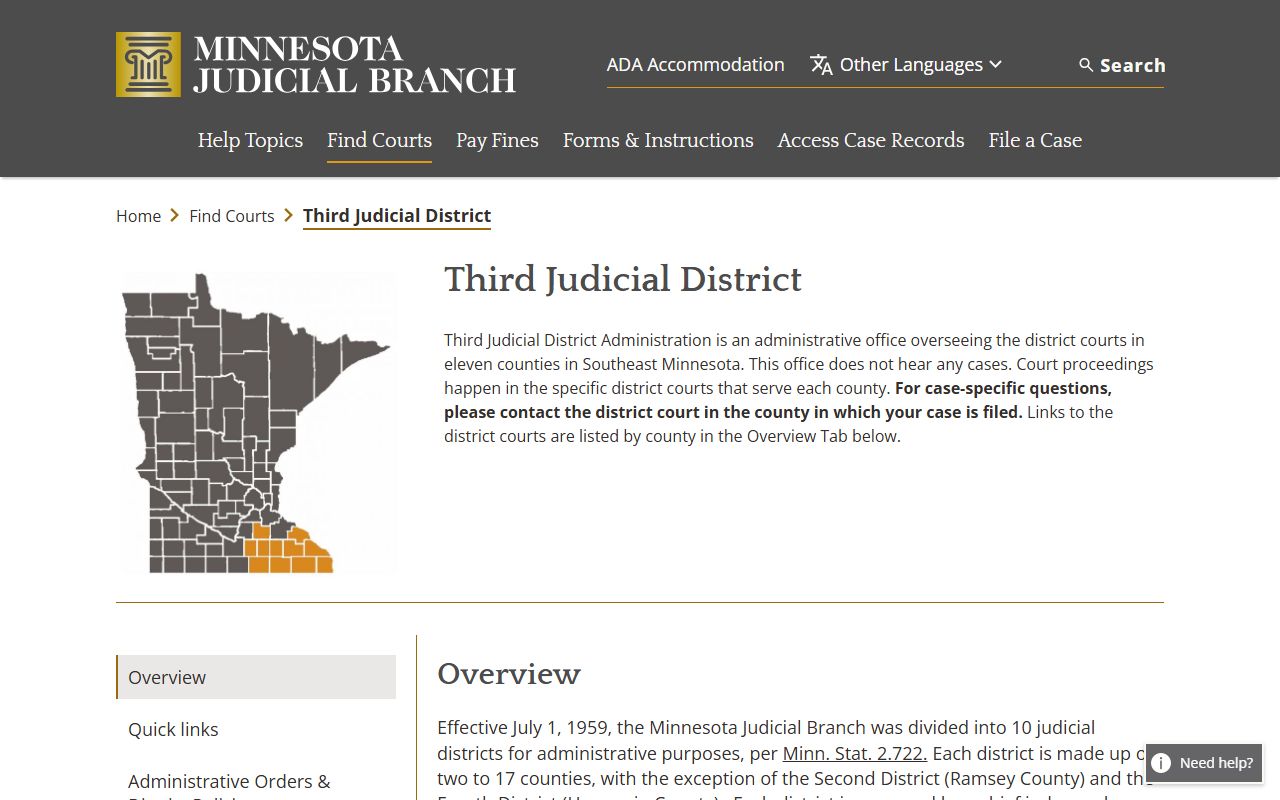
Waseca County is in the Third Judicial District. The district administration covers multiple counties, but the local filing office remains the Waseca courthouse.
Source: Third Judicial District.
Magistrate and Hearing Rules
Waseca’s hearing-appearance policy sets different defaults for criminal, family, probate, and treatment-court hearings. Some matters are remote; many of the more active criminal and family hearings are in person. The calendar can change, so the docket and the hearing notice both matter.
Source: Minnesota remote hearings.
Courthouse History
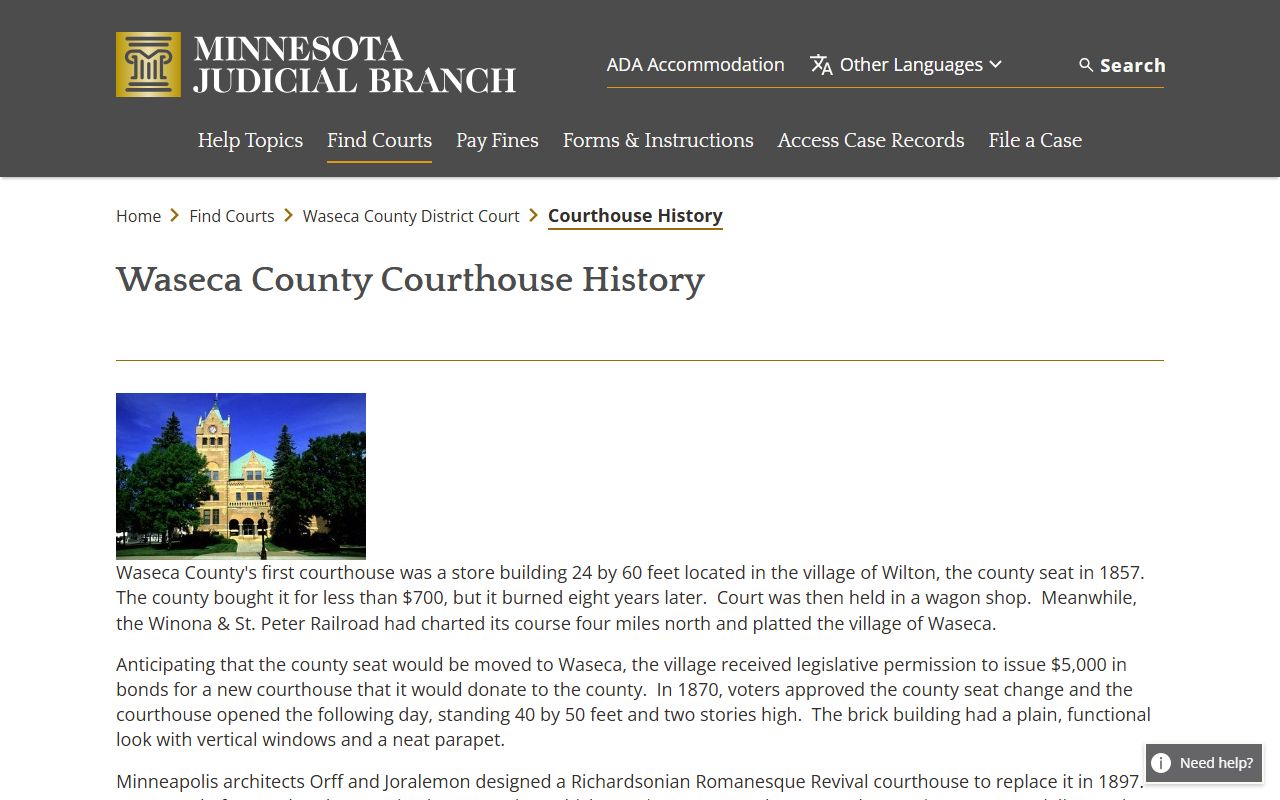
The courthouse has a strong local-history story. The current building dates to 1897, uses Richardsonian Romanesque design, and anchors the downtown courthouse campus in Waseca.
Source: Waseca courthouse history.
Court Administration And Contacts
For case questions, filings, copies, and calendar follow-up, court administration is the office that matters. In Waseca, that office sits in the courthouse and keeps the local case record connected to the statewide court system. It is also the place to call when MCRO shows only part of the answer.
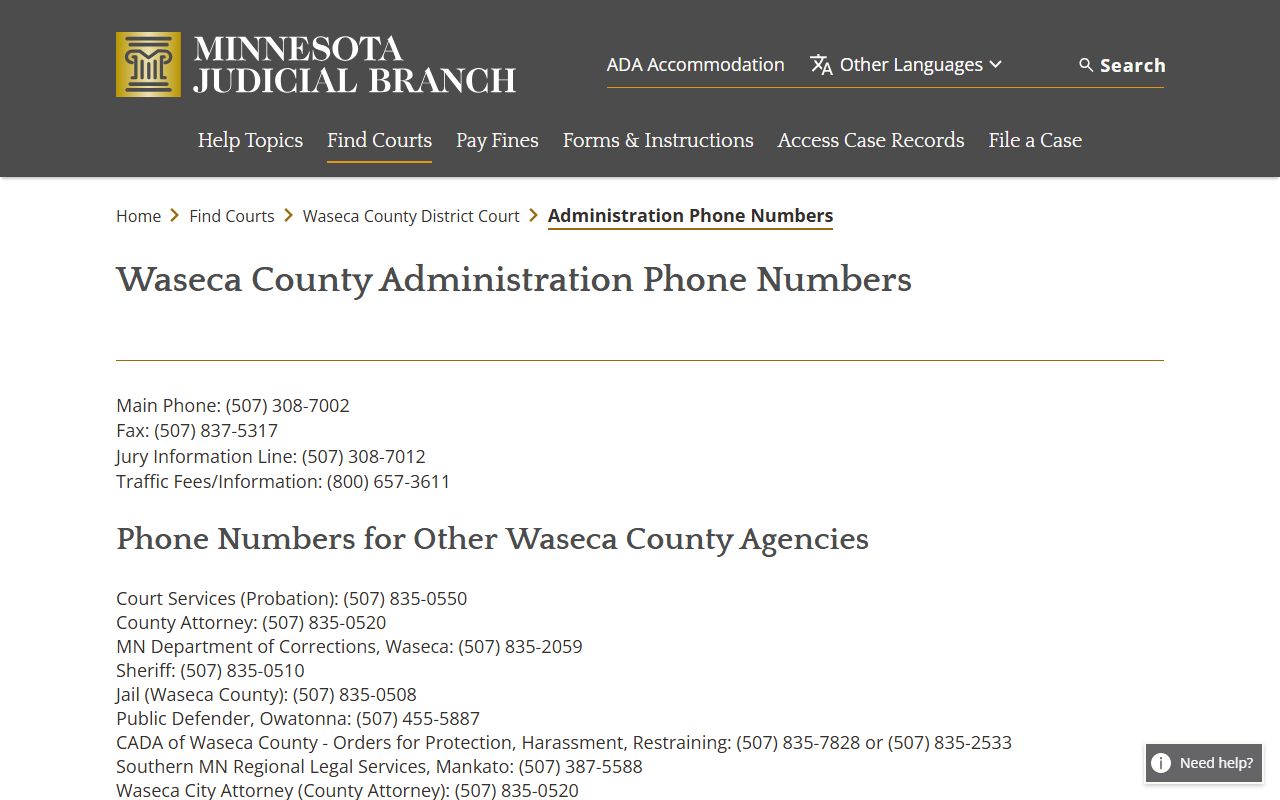
The district-court contact page lists related phone numbers for the jail, sheriff, county attorney, public defender, probation, and protective-order resources. That makes the district court page more than a courthouse description; it is the local switchboard for the whole justice campus when a record question touches more than one office.
Source: Waseca District Court contact numbers.
Recording And Campus Rules
Waseca has a specific recording order for courthouse court areas, and the order is strict about public audio and video recording. That matters because the district court page is where the public goes first when it wants to know what can be seen or shared in a hearing space.
The courthouse campus also matters. The district court sits in the courthouse, the jail and sheriff are nearby in the Security Building, and the county offices on the campus help explain why court, custody, and prosecutor questions often get asked together even though the answers come from different desks. If you show up for a hearing, the calendar and the courtroom assignment matter more than a general courthouse description.
For Waseca users, the district court page is the hub. It is the place that ties together case filing, hearing format, courthouse history, and the local rule that limits public recording inside the hearing spaces.
How Waseca Fits The State System
Waseca County District Court is part of the Minnesota Judicial Branch, so the local court works inside the statewide system even though the courthouse is local. That is why MCRO, statewide forms, and the Minnesota Court payment tools matter here. They are not separate from the local court; they are how the local court connects to the rest of the state system.
For records users, that setup means a local case can still require statewide tools to read or pay it. The courthouse is the filing point, but the public search trail may continue through the state website, the case portal, or a related agency page depending on the case type.
What The Public Can Usually See
The public can usually see the case type, party names, docket entries, and many filed documents unless a rule limits access. Sealed, juvenile, and some family or probation records have narrower access. That is why the court page matters even when the searcher already has a name or case number: it explains whether the record should be public, limited, or only available at the courthouse.
In Waseca County, the court is the center of that review. It is where the public record begins, where the docket is kept, and where the local filing rules connect to the statewide court structure. That makes the district court page the final reference point when another page only gives part of the answer.
Why The District Court Page Matters For Searches
Many Waseca searches begin on a different page and end here. A jail roster may point to a criminal case, a traffic citation may point to a hearing, and a probate question may point to a docket entry. The district court page is the place that explains how those records fit together.
That is why this page stays broad. It does not replace the case pages; it shows the courthouse system that supports them. For a user trying to sort out one local record, that context is often the missing step.
Courtroom And Calendar Basics
Most district court searches eventually come back to the calendar. A hearing date tells you whether the case is active, continued, or resolved, and the calendar can be the fastest way to separate a live matter from an old one. In Waseca, that is useful for criminal, family, probate, and traffic work alike.
Once the date is known, the courthouse can usually point the searcher to the right division or the right case page. That is the practical value of the district court page: it turns a county name into an actual case path.