
What Probate Covers in Waseca County
Probate includes informal and formal estates, wills, inventory filings, distributions, guardianships, and conservatorships. In Waseca County, all of it is district court business, so the public record path begins with MCRO and then moves to court administration when an official copy is needed.
Probate Terms Defined
- Testator
- The person who made the will.
- Executor
- The person named to carry out the will.
- Intestate
- Dying without a will.
- Guardianship
- A case for personal decision-making authority.
- Conservatorship
- A case for financial decision-making authority.
How to Search Waseca County Probate Records
Use MCRO Case Search and Document Search for probate files. Probate cases may show in the public docket and remote documents, but older or non-digitized files can still require a courthouse request. If the estate is small enough, the affidavit process may avoid opening a full probate case.
- Search the name or case number in MCRO.
- Open the probate case detail or document list.
- Use court administration for certified copies.
- Check the small-estate affidavit rule if probate may not be needed.
Probate in Waseca County
Probate cases are handled by Waseca County District Court. The courthouse address is the same district-court campus used for most local court records. Remote hearings may be possible in some probate matters, but the file itself is still a district court record.
Probate Filing Fees
| Item | Amount |
|---|---|
| Certified/exemplified copy | $28 |
| Uncertified copy | $0 |
| Judgment search, certified per name | $5 |
| Transcript of judgment | $40 |
What Waseca County Probate Records Show
Probate files can show the will, petition, inventory, accountings, notices, orders, and final distributions. Guardianship and conservatorship files can also show the people involved and the court’s authority orders.
Restricted Probate Records
Minor guardianships, sealed matters, and sensitive family files may not be fully public. If a probate file is missing remotely, it may still be available at the courthouse counter.
Small Estate Affidavits And Forms
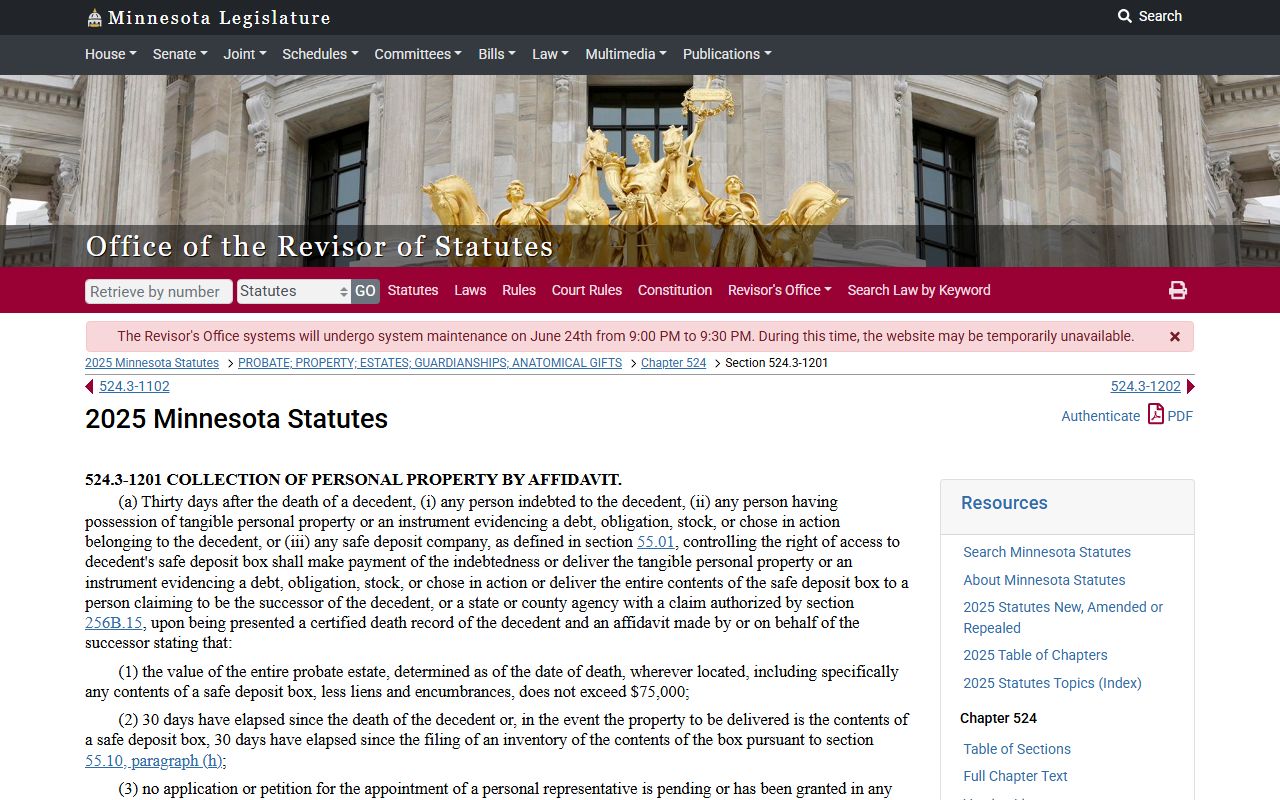
Waseca probate users should check the small-estate affidavit rule before filing a full case. If the estate qualifies, the affidavit path can be quicker and cheaper than opening a probate file. That matters because probate is often about process as much as it is about the final record.
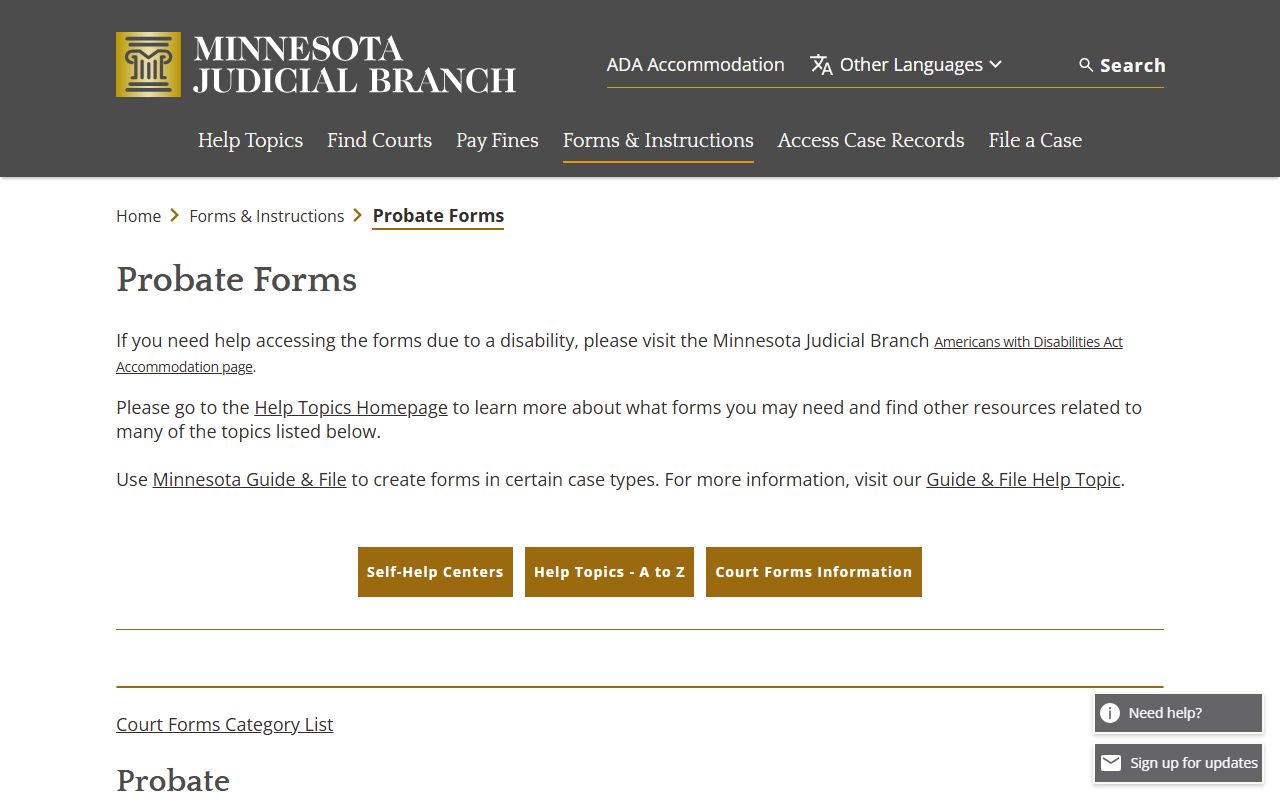
When a full case is still needed, the Minnesota probate forms page is the practical starting point. The packet list shows how the state organizes informal and formal probate, which is the exact structure Waseca uses at the district-court level.
Source: Minn. Stat. 524.3-1201.
Source: Minnesota probate forms.
Bankruptcy And Estate Cases
Probate is a state-court estate process. Bankruptcy is a separate federal court process, so a Waseca resident who sees the U.S. Bankruptcy Court in search results should not treat it as the same thing as county probate. They are related only in the broad sense that both can involve debts and property.
That line matters for records seekers because the venue tells you the rest of the path. Waseca probate remains in district court, while bankruptcy goes to the federal court system and PACER. If you need a probate decree or estate filing, the federal court is the wrong place to ask. If the estate is still local, court administration remains the office that can confirm the case file.
Source: U.S. Bankruptcy Court District of Minnesota.
Who Usually Opens A Probate Case
Probate cases are usually opened by a personal representative, an attorney, or a family member who needs the estate administration to move forward. In Waseca County, the district court file is what gives the estate a formal case number and creates the public record trail for notices, orders, and distributions.
That is important because the family often has several reasons to look up the case at once: to find the will, to confirm who was appointed, or to see whether the court has already approved a final distribution. The case file is the map for all of that, even when the original question was just about one document.
Small Estate Questions
Not every estate needs a full probate file. Minnesota's small-estate affidavit rule can let a family use a simpler path when the estate qualifies. For Waseca users, that makes the amount of property and the type of asset important before a formal case is started.
If the estate looks small enough to fit the affidavit process, the searcher may need to check the statute before assuming a probate case exists. That keeps the county record search accurate and avoids asking court administration for a file that was never opened in the first place. When a full case is needed, the district court remains the correct path.
Why Probate Files Matter
Probate files are often the only place where Waseca families can see who was appointed, what notices were filed, and how property was handled after death. That is why even a small estate question can lead to a court-file search. The record answers practical questions about authority, timing, and distribution, not just who inherited what.
When the case is open, court administration is the office that can confirm whether the file is public, pending, or available only in part. That makes probate one of the clearest examples of why the courthouse remains the center of the county record trail.
Probate Request Basics
When asking about a probate file in Waseca, start with the deceased person's name and any known case number. If you are looking for a will or order, say that directly. If you are looking for a full estate file, say that too, because the office may need to identify the exact document series before it can answer.
That keeps the request precise and makes it easier for court administration to tell you whether the item is public, certified, or still being processed.