
Criminal Court Records in Waseca County
A criminal court record is the court’s file for a criminal case. It starts when the prosecutor files charges and keeps growing through arraignment, pretrial motions, plea hearings, trial settings, and sentencing. In Waseca County, that file is handled by the district court, not the jail roster or a law-enforcement booking log.
The county’s criminal cases sit inside Minnesota’s Third Judicial District. Misdemeanor, gross misdemeanor, and felony cases all flow through district court, and the public record is easiest to search through MCRO before any courthouse follow-up.
How to Search Waseca County Criminal Court Records
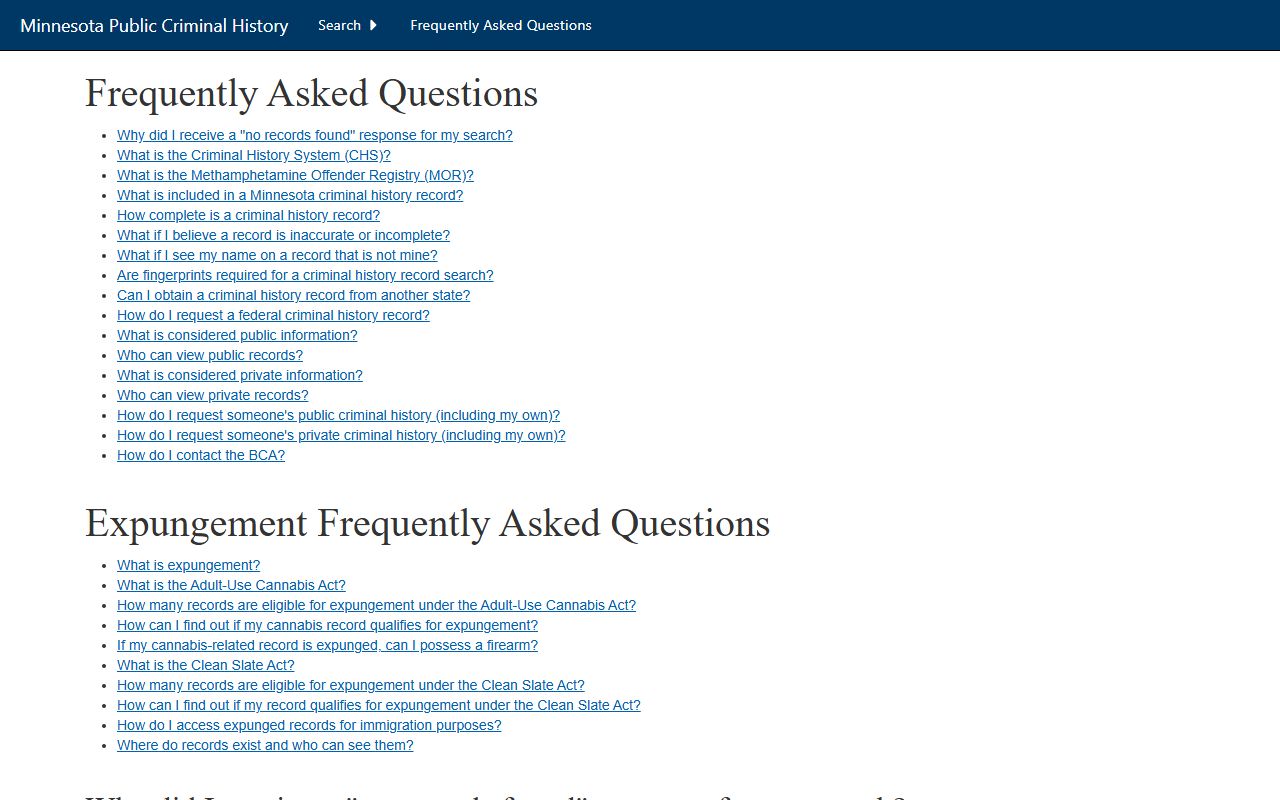
Use MCRO Case Search first. Search by defendant name or case number, then open the case detail or register of actions. If you need the official copy or the file is partially hidden online, Waseca Court Administration can confirm the record and provide certified copies. The Minnesota public criminal-history search is separate and should not be confused with the court file.
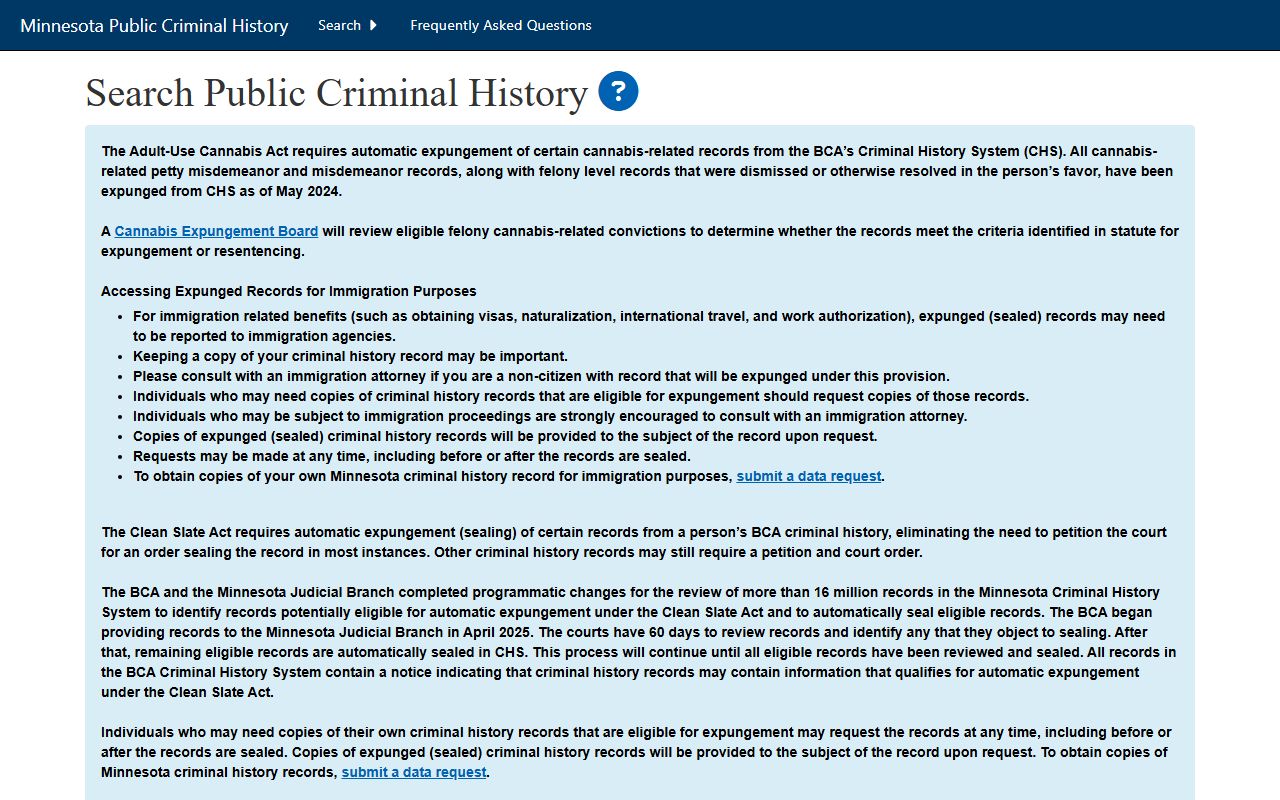
The criminal case file is the best place to see the charge list, hearing trail, plea, and final result. The BCA search is the better tool when the question is whether a person has a public criminal-history entry for background-check purposes, not whether a Waseca case is open on the court docket.
- Open MCRO Case Search.
- Enter the defendant name or case number.
- Review charges, hearings, and docket entries.
- Use court administration for certification or older files.
Source: BCA public criminal history search.
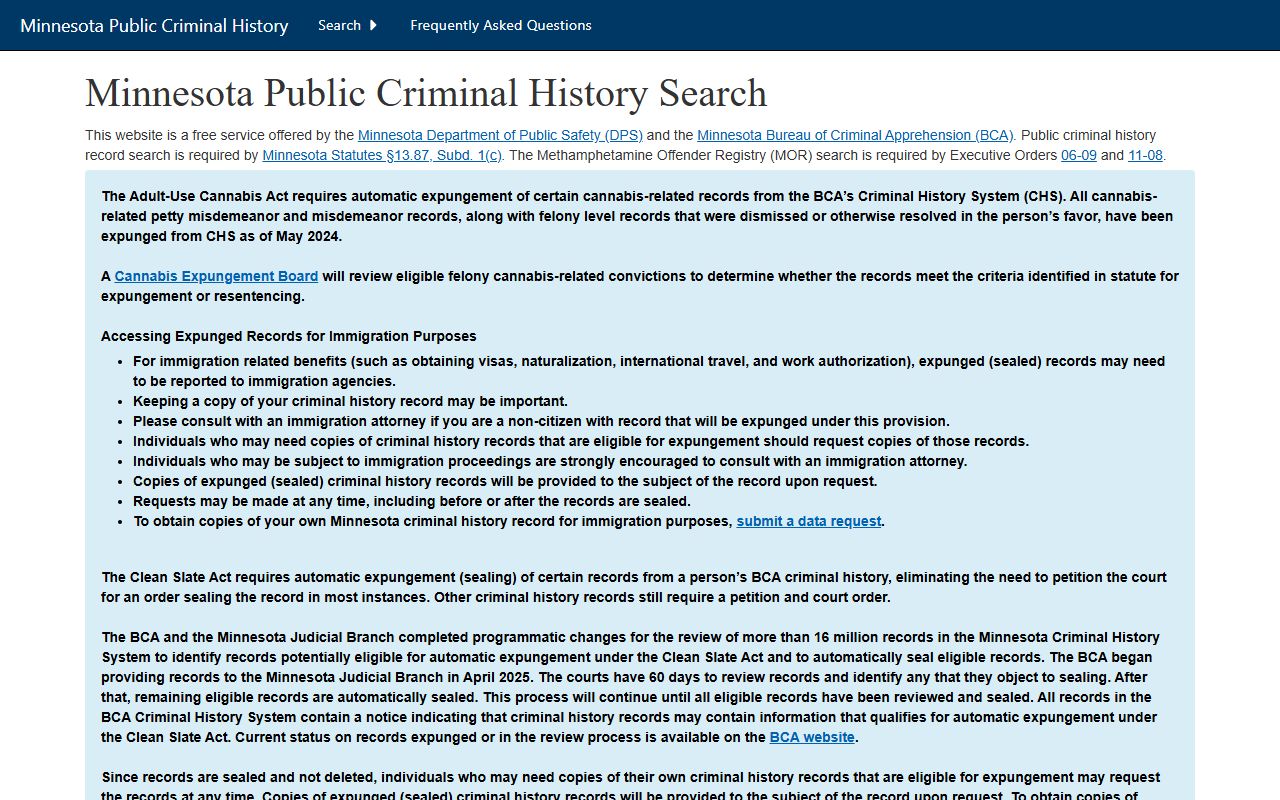
Source: BCA criminal history search form.
Stages of a Criminal Case
Waseca criminal cases usually move from charges to arraignment, then through motions and pretrial hearings before a plea, trial, dismissal, or sentencing. The docket shows the movement; the record explains the action.
| Stage | What Happens |
|---|---|
| Arraignment | The charges are read and the defendant responds. |
| Pretrial / Motions | The parties file and argue requests to the court. |
| Plea or Trial | The case resolves by plea or is tried. |
| Sentencing | The court imposes punishment or conditions. |
What a Waseca County Criminal Court Record Shows
Public criminal records usually show the charge, statute, plea, disposition, sentence, and hearing history. If the case is active, the docket may also show bond, continuances, probation violations, and future court dates.
| Field | What It Shows |
|---|---|
| Case Number | The district court file number. |
| Defendant | The person charged in the case. |
| Charges | The alleged offenses and statutes. |
| Plea | Guilty, not guilty, or another response. |
| Disposition | The final or current case outcome. |
| Sentence | Jail, probation, fines, or other sanctions. |
Charges vs. Convictions
A charge is an allegation. A conviction is a final finding or plea that resolves that allegation. Waseca criminal records can show charges that were later amended, dismissed, or resolved without conviction.
| Charge | Conviction | |
|---|---|---|
| Stage | Accusation | Verdict or plea |
| Burden | Probable cause | Beyond reasonable doubt |
| Public record | Yes | Yes |
Sealed vs. Expunged Records
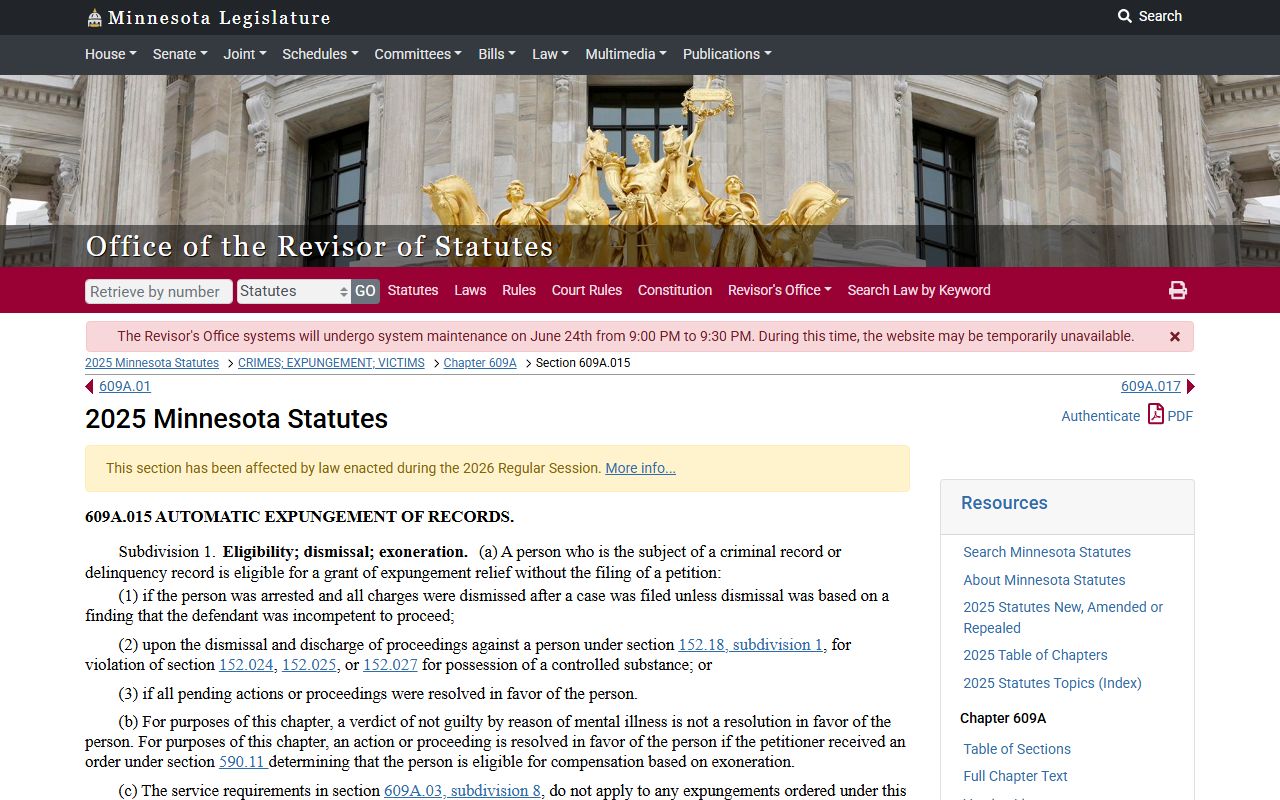
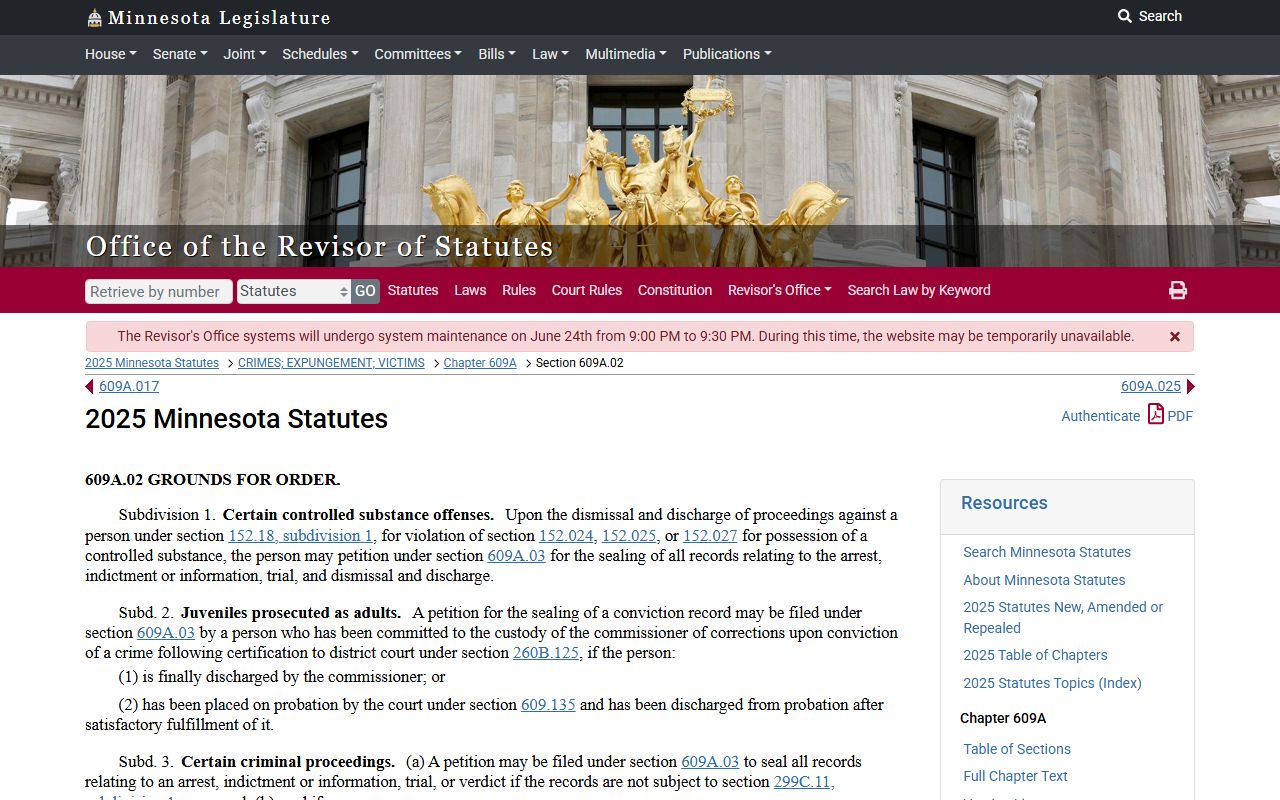
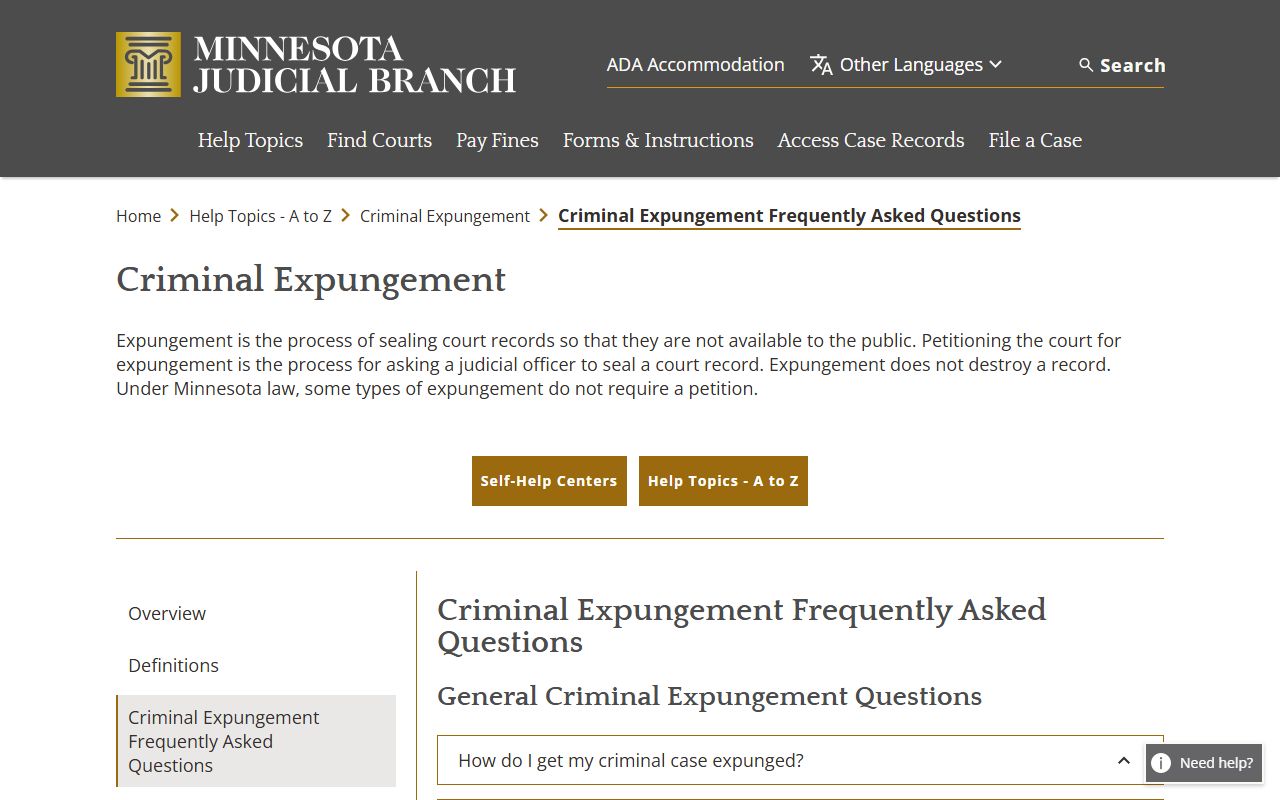
Some criminal records are sealed or expunged under Minnesota law. Sealed records are restricted from public view; expunged records are removed from ordinary public access, though some agencies may still retain limited access. Waseca users should read the docket and the statute together, because the change in access can be broader than the underlying case outcome.
| Sealed | Expunged | |
|---|---|---|
| Visibility | Hidden from public | Removed from ordinary public access |
| Access | Limited | Very limited |
| Eligibility | Depends on rule or order | Depends on Chapter 609A |
Source: Minn. Stat. 609A.015.
Public Access to Criminal Court Records
Minnesota Rule of Public Access 4 and the state data practices law control much of what Waseca residents can view. Remote access is narrower than courthouse access, so some files are public at the courthouse but not online. Certified copies still come from court administration, not the search portal.
That distinction matters most when a file has been partially restricted. MCRO can show enough to confirm the case exists, but the courthouse record and the statute may be the only places that explain the missing piece. Waseca users who need a practical answer should check the public case view first, then ask court administration whether the missing item is a remote-access limit, a sealing issue, or a document that is simply not downloadable.
Key Statutes:
Minnesota Rule of Public Access 4 - criminal case records are public unless restricted.
Minn. Stat. 13.03 - government data access rule.
Source: Minn. Stat. 609A.02.
Background Check Considerations
MCRO is not a consumer report. It is useful for court research, but it is not the same thing as a background check prepared for employment, credit, tenant screening, or insurance. In Waseca, that difference is practical, not theoretical: the court file tells you what the case did, while the BCA criminal-history tools tell you what can be seen in a public-history search.
If the goal is screening, the BCA path is usually the better first step. If the goal is case tracking, motion research, or a certified copy, the district court file is the right one. Those are different tools, and using the wrong one is the easiest way to miss an important detail.
Important: Do not use this site as an FCRA-regulated consumer report.
Source: BCA criminal history FAQ.
Restricted Criminal Court Records in Waseca County
Juvenile cases, sealed files, expunged records, and some sensitive hearings are not fully public. If a criminal case is missing from MCRO, that may reflect a remote-access rule rather than a missing courthouse file.
Waseca County users should read the county attorney role, the public defender process, and the expungement statutes together. Those are the three places where the public file can change the most after the first charge is filed.
Source: Minn. Stat. 609A.02.
Source: Minnesota criminal expungement FAQ.
Local Counsel and Court Flow
In Waseca, criminal cases run through the county attorney, the public defender system, and the district court calendar. If a case is active, the docket can show the next hearing while the calendar tells you whether the hearing is in person or remote under local policy. If the charge has changed, a docket update may appear before a full document update does.
That is why criminal research works best in layers: the court file for what was filed, the calendar for what is set next, the jail or DOC system for custody, and the expungement rules for what may later disappear from ordinary public view. Reading all four together gives a much cleaner answer than any single lookup screen.
Waseca Criminal Records In Practice
For a Waseca criminal case, the name on the booking side, the name on the charge file, and the name on the calendar can all be the same person, but the record will still be split across offices. That is normal. The county attorney files the case, court administration maintains the record, and the sheriff or jail handles custody when the case starts with an arrest.
The cleanest search path is to use the docket for timing, the case file for charges and motions, and the jail or DOC system for custody. That is the whole workflow the Waseca records pages are trying to make easier.